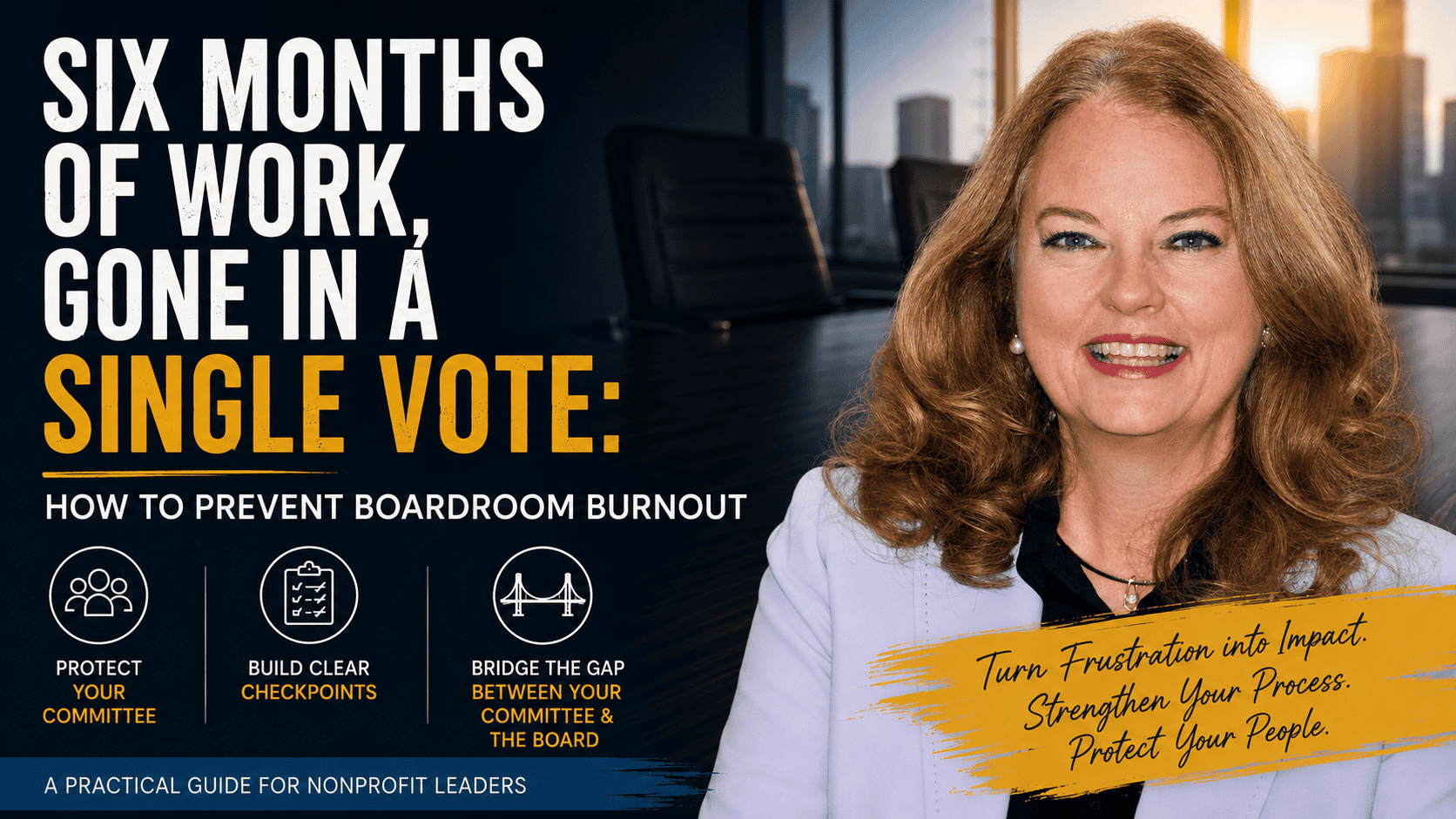
It is a painful scenario that plays out far too often in the nonprofit sector: A dedicated committee spends six grueling months updating an outdated strategic plan.
These are highly skilled volunteers and staff members. They pore over every single word, constantly gather feedback, and invest dozens of extra hours outside their normal schedules. They are passionate, focused, and ready to move the organization forward.
The day of the big presentation arrives. The draft is laid out on the table. And then, the board does something that leaves the committee completely stunned.
With a single vote, they throw out almost the entire new document and decide to stick with the old plan. Six months of momentum, energy, and commitment evaporated in an instant.
The True Cost: Volunteer Burnout
When a complete U-turn like this happens, it isn’t just a breakdown in paperwork. It is a fast track to profound boardroom burnout.
When high-level volunteers feel that their time, expertise, and energy have been wasted, they don’t just step down from a committee. They often walk away from the organization entirely. In our sector, relationship capital is everything. We cannot afford to burn out the very leaders who anchor our programs and campaigns.
So, why does this happen?
It is easy to point fingers at the board and call them stubborn or resistant to change. But as a coach, I look deeper at the workflow itself. This painful outcome happens when wordsmithing takes precedence over high-level visioning.
A committee should never spend months drafting details in a vacuum. If a team builds a beautiful, detailed house on a foundation the board hasn’t actually approved, the board will naturally reject it.
The secret to avoiding this frustration isn’t working harder on the document; it is changing how you get alignment before the writing ever begins. Here is the exact two-step framework I use to solve this dilemma.
The Structural Alignment Framework
To protect your committee’s time and ensure your strategic plan actually gets approved, you need to implement two clear checkpoints that bridge the gap between your committee and the full board.
Step 1: Secure Strategic Pillar Approval First
Before anyone types a single paragraph of a new plan, the full board must debate, refine, and vote on the 3 to 5 core strategic pillars. These are your high-level focus areas (such as financial sustainability, regional expansion, or technology integration).
By voting on the pillars first, the board sets the boundaries of the playing field. The committee’s job is then to build the roadmap within those boundaries, rather than guessing where the boundaries should be.
Step 2: The Draft Pulse Check
Never wait six months to show the board the final product. At the two-month mark, bring a one-page, bulleted draft back to the full board.
Present it simply: “Here is the direction we are heading based on the pillars you approved. Are there any red flags or course corrections needed before we spend the next four months writing out the fine details?” This quick check-in eliminates surprises, keeps the board bought into the process, and guarantees a smooth final vote.
How to Heal the Fallout
If you are currently leading a team that just experienced a major U-turn or rejection, you have an immediate leadership challenge on your hands. Here is how you could handle the resentment pragmatically:
- Validate the effort, not just the outcome: Meet with the committee right away. Acknowledge that the process broke down, but clearly state that their data, insights, and energy are highly valuable to the organization’s future.
- Salvage the data: The board may have rejected the final policy wording, but the research, community feedback, and situational analysis gathered by the committee are gold mines. Repurpose that excellent work into operational goals for staff or upcoming tactical projects.
- Own the process shift: Commit to the team that moving forward, the organization will use a structured alignment framework so their time is protected, respected, and highly effective.
Strategic planning should be an energizing process that propels your mission forward, not an exercise in boardroom frustration. By managing the framework instead of just managing the text, you protect your people, preserve your leadership capital, and build a stronger foundation for the community you serve.
Let’s Build a Stronger Board Framework Together
Are you preparing for an upcoming strategic planning cycle or trying to navigate a challenging board dynamic? Don’t let your team’s hard work happen in a vacuum.
- Need a speaker or workshop leader? I deliver interactive masterclasses on nonprofit leadership, alignment, and modern workflows using Artificial Intelligence.
- Looking for hands-on guidance? Let’s discuss how customized coaching can help your organization align its board and executive team.
Click Here to Schedule a Discovery Call to learn how we can strengthen your process and protect your people.