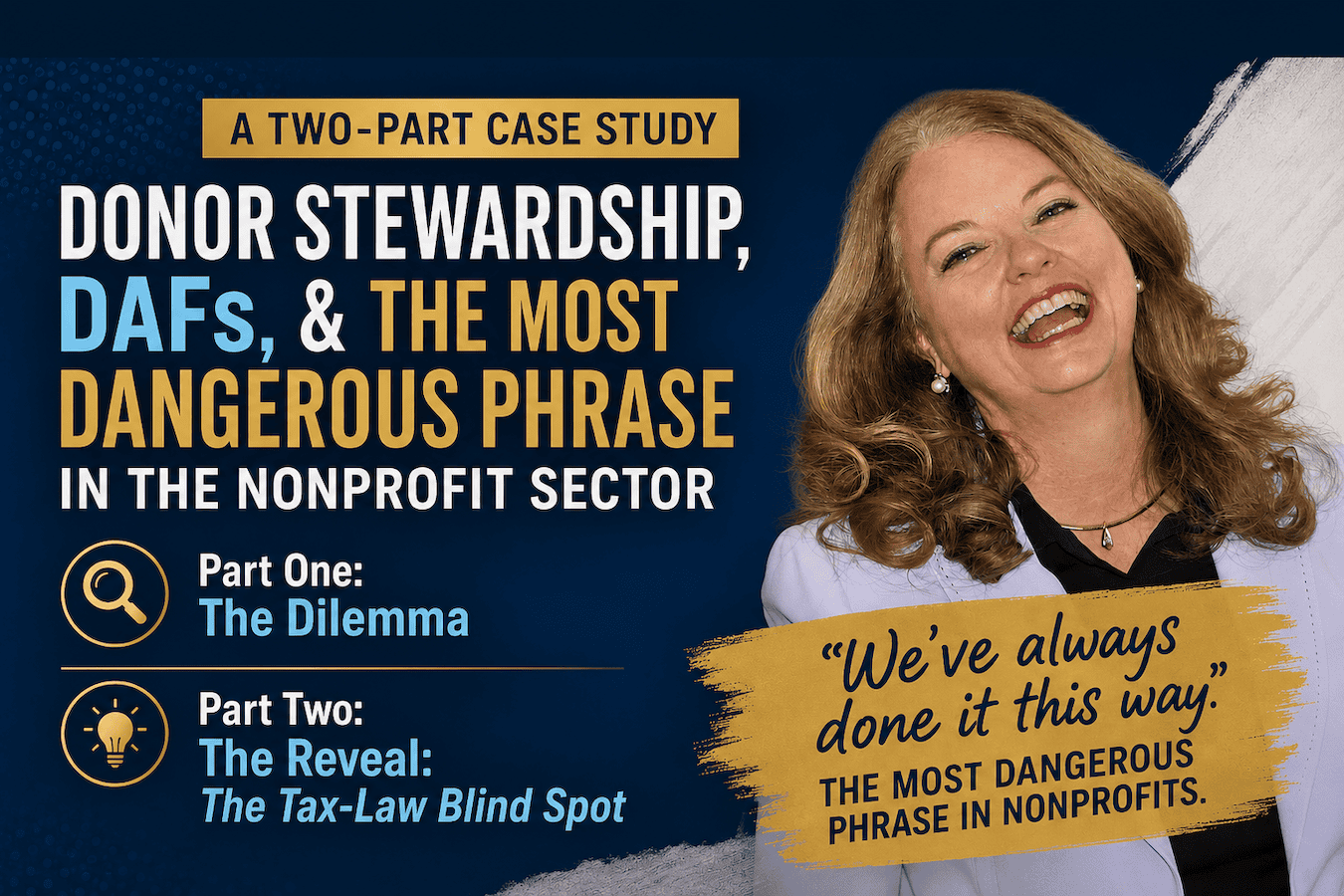
Are you accidentally putting your biggest donors and your non-profit’s tax status at serious legal risk? For a lot of organizations, the answer is yes, and they don’t even know it.
This blog post unpacks a real-world board dilemma, the decision that board ultimately made, and the better path your organization can take instead.
The Setup: Good Intentions, Bad Compliance
Picture a well-meaning development team happily accepting major contributions from Family Foundations and Donor Advised Funds (DAFs). To express gratitude, they send these supporters a couple of complimentary gala tickets and some branded merchandise.
On the surface, it looks like textbook donor stewardship.
But here’s the catch.
Why This Is a Compliance Red Flag
Because DAFs and Family Foundations already received a tax break when the money was placed into the fund, IRS rules prohibit them from receiving any personal benefit or kickback from the non-profit.
That means the gala tickets, the branded swag, and any other tangible perk are not just a nice gesture, they’re a major compliance violation. And the organizations on the receiving end of those gifts often have no idea.
The Board’s Response
When this issue was brought before the board, the reaction was one many non-profit leaders will recognize:
“But this is the way we’ve always done it, and no one has ever told us it was wrong.”
The board faced a genuine dilemma:
- Continue the perks to keep their most powerful donors happy and risk an audit.
- Halt the perks immediately to stay compliant and risk upsetting their biggest supporters.
What the Board Actually Did
When confronted with the IRS regulations, the board chose convenience over compliance.
They did not audit their processes. They did not update their acknowledgment letters. They did not separate the benefits. They simply continued doing things exactly as they always had.
The Takeaway: The Most Dangerous Phrase in the Non-Profit Sector
“We’ve always done it this way” is the most dangerous phrase in the non-profit sector, especially when it comes to compliance.
Even if nobody has caught it yet, violating DAF and foundation benefit rules puts your organization and your donors at serious legal and tax risk. It is always worth doing things the right way, even when it means having a tough conversation with a donor.
A Better Way to Handle It
If your non-profit accepts gifts from DAFs or Family Foundations, here’s how to protect everyone involved:
- Audit your current stewardship practices. Map out every benefit currently flowing to DAF and foundation donors.
- Separate the benefits. Make sure no personal or tangible benefit goes back to these specific funding sources.
- Update your acknowledgment letters. Reflect the no-benefit requirement in your gift documentation.
- Have the honest conversation. Explain the reasoning to your donors. The right supporters will respect an organization that protects them from risk.
Final Thought
Compliance isn’t the enemy of good stewardship—it’s part of it. The organizations that thrive long-term are the ones willing to question their oldest habits and choose the right way, even when it’s the harder way.
Is there a “we’ve always done it this way” habit hiding in your organization? It might be worth a second look.