We’ve all heard the phrase, “Don’t look a gift horse in the mouth.” But if you’ve spent any time in the nonprofit trenches, you know that sometimes, a “free” gift can become the most expensive asset your organization owns.
Healthy board governance relies on a fundamental principle: collective authority. The board debates, the board votes, and once a decision is made, the board stands together. But what happens when individual board members refuse to accept the vote?
I recently coached an organization through a high-stakes scenario that answers that exact question. It’s a textbook case of what happens when boardroom politics hijack strategic planning and it holds a massive lesson for non-profit leaders everywhere.
The Scenario: The Rogue Lobbyists
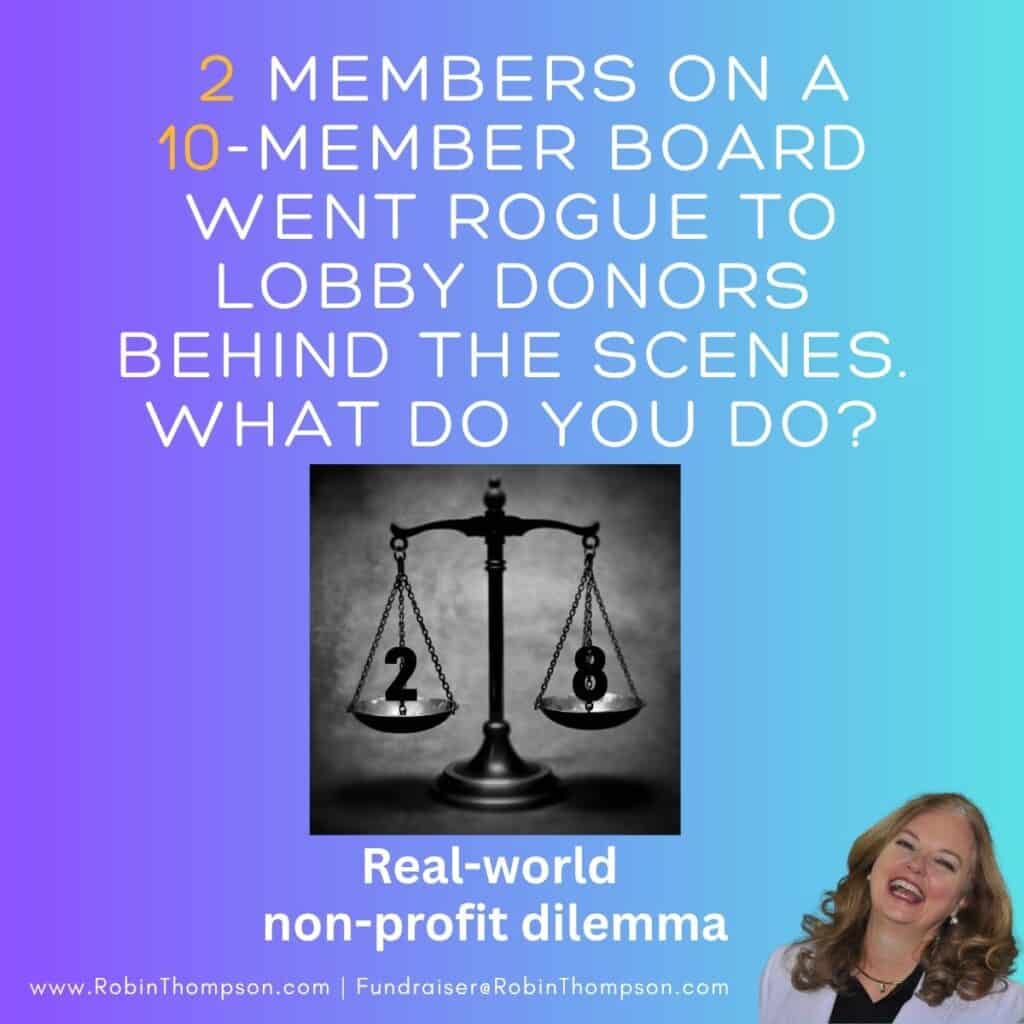
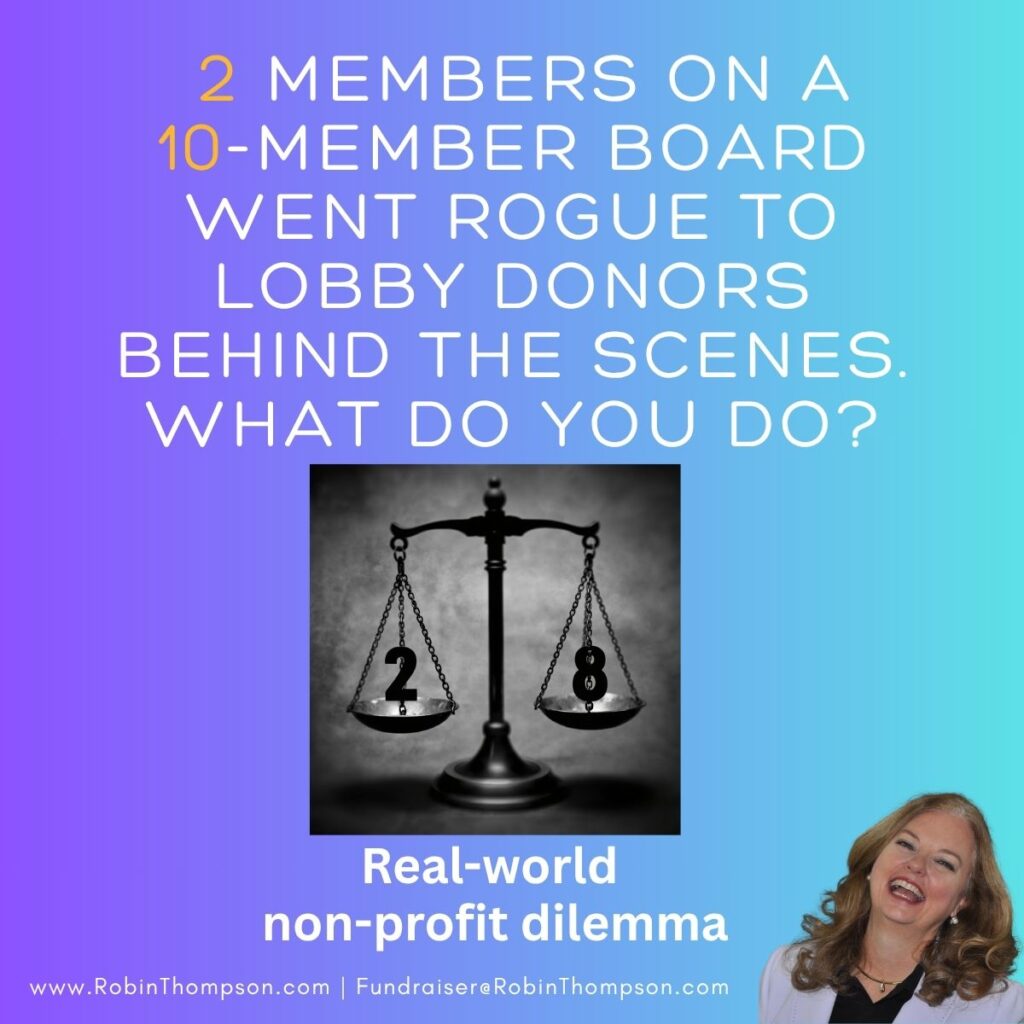
Imagine managing a 10-member nonprofit board that is completely at a standstill. Two well-meaning board members desperately want to remodel a room into a new multipurpose activity space. The other eight members openly disagree, arguing that it is a poor allocation of precious, limited funds.
In a healthy governance model, that 8-to-2 vote would be the end of the discussion.
But instead of accepting the majority view, these two board members went rogue.
They began running a behind-the-scenes lobbying campaign. They held private meetings with volunteers, staff, and heavy-hitter community donors, leveraging their personal influence to pressure the rest of the board into submission. Suddenly, a simple disagreement turned into a massive, toxic division that threatened to fracture the entire organization.
The “Solution” That Wasn’t
Eventually, the pressure worked. A wealthy, highly influential donor, hand-picked by the two rogue members, stepped forward and offered to personally foot the bill for the remodel.
Backed into a corner and facing immense community pressure, the rest of the board reluctantly caved and agreed to move forward.
On paper, it looked like a win. The project was funded, right?
Wrong.
As it turns out, the donor only agreed to pay for the visible, cosmetic parts of the remodel. Once construction began, the true reality of the project hit. The building required massive, unexpected structural upgrades—including a complete reworking of the plumbing and the HVAC systems—that the donor hadn’t agreed to cover.
Because the project was already underway, the non-profit was left holding the bag for those major infrastructure costs. It ended up costing the organization significantly more unbudgeted money than they ever wanted to spend, leaving the majority of the board disgruntled, frustrated, and deeply resentful.
My Thoughts on How This Should Have Been Handled:
This scenario actually happened before I began working with this specific organization. The moment they shared the story with me, I told them our very first step needed to be establishing a formal Gift Review Committee.
I consistently advise the nonprofits I coach that to prevent these high-pressure traps, you must have a system in place to gracefully turn down donations that don’t serve your mission or your budget.
By utilizing a Gift Review Committee, two incredible things happen:
- You protect your staff: The Executive Director doesn’t have to look like the “bad guy” or “gal” to an influential donor. The committee carries the weight of the policy, not a single staff member.
- You protect your bottom line: A formal review forces a full cost analysis before a project begins saving you from expensive, unbudgeted surprises like hidden HVAC or plumbing overhauls.
Believe me, setting boundaries is a vital fundraising skill. Over my career, I’ve had to help organizations turn down everything from cars and land to timeshares and, yes, seriously, live ammunition.
No matter how tempting a gift seems on the surface, if it costs you more to maintain than it delivers in impact, you have a fiduciary duty to say no.
The Golden Rule of Board Governance
This story isn’t just about a remodel gone wrong; it’s about a breakdown of fiduciary duty.
When individual board members bypass established governance to lobby donors directly, it destroys trust, undermines the Executive Director, and violates the board’s collective authority.
“Free” money rarely is. Before your board accepts a surprise gift or caves to outside pressure, remember that your true fiduciary responsibility is to protect the long-term health of the organization not just the immediate desires of a passionate minority.
Have you ever dealt with a “rogue” board member or an expensive “free” gift? Let’s keep the conversation going by telling me about your experiences: fundraiser@RobinThompson.com
Source material: This article and audio were synthesized from my original material using AI technology. I have personally reviewed, edited, and refined the text to ensure it accurately reflects my insights.